
Global Water Scarcity and Farmland Investing
Key Points:
- Freshwater resources are finite and shrinking globally.
- Water access varies significantly across the United States.
- In the American West, Senior surface water rights holders may see outsized appreciation due to the current supply and demand imbalance.
Global Freshwater Resources are Finite and Shrinking
One of the core tenets of investing in American farmland is the continually decreasing supply of cropland acres in the United States. As we have highlighted many times in the past, we lose approximately 4.8 acres of cropland every minute. In addition to this shrinking supply base of cropland, it is also critical to highlight the global scarcity of freshwater resources and how that factors into farmland investments. An investment in farmland is also an investment into this critical, shrinking resource.
The total volume of freshwater on Earth is finite. All of the water on our planet is subject to a closed system called the hydrologic water cycle. Freshwater makes up less than 3% of all water on Earth. Most of that freshwater (estimated 70%) is locked away in glaciers and ice caps, and much of the rest is in deep, inaccessible groundwater. Ultimately, less than 1% of all of Earth’s water is the accessible freshwater that humans rely on in lakes, rivers, and shallow aquifers.
The supply of available and usable freshwater is also shrinking because this freshwater is becoming inaccessible or unusable. Several key factors are driving this decline, such as the unsustainable use of shallow groundwater aquifers that are being depleted at a faster rate than they can be replenished, growing demand for freshwater, and contamination of freshwater resources through pollution. This is further exacerbated by inadequate infrastructure and distribution systems, conflict, and poor management of water resources. In recent decades, changing climatic conditions have also altered patterns of weather and water around the world. According to a report from the Global Commission on the Economics of Water, demand for fresh water will outstrip supply by 40% by the end of this decade.
As the supply of any critical resource shrinks, whether it be cropland or the freshwater needed to irrigate cropland, the value of that resource historically increases as the demand for that resource continues to increase.
Assessing Water Availability Across the U.S. Farmland Market
Water rights are a critical component of underwriting farmland in the United States. Geographical regions contain varying degrees of access to irrigation. Generally, farmland comes with water rights that are “appurtenant” to the property, meaning they are attached to the land itself and transfer with the property.
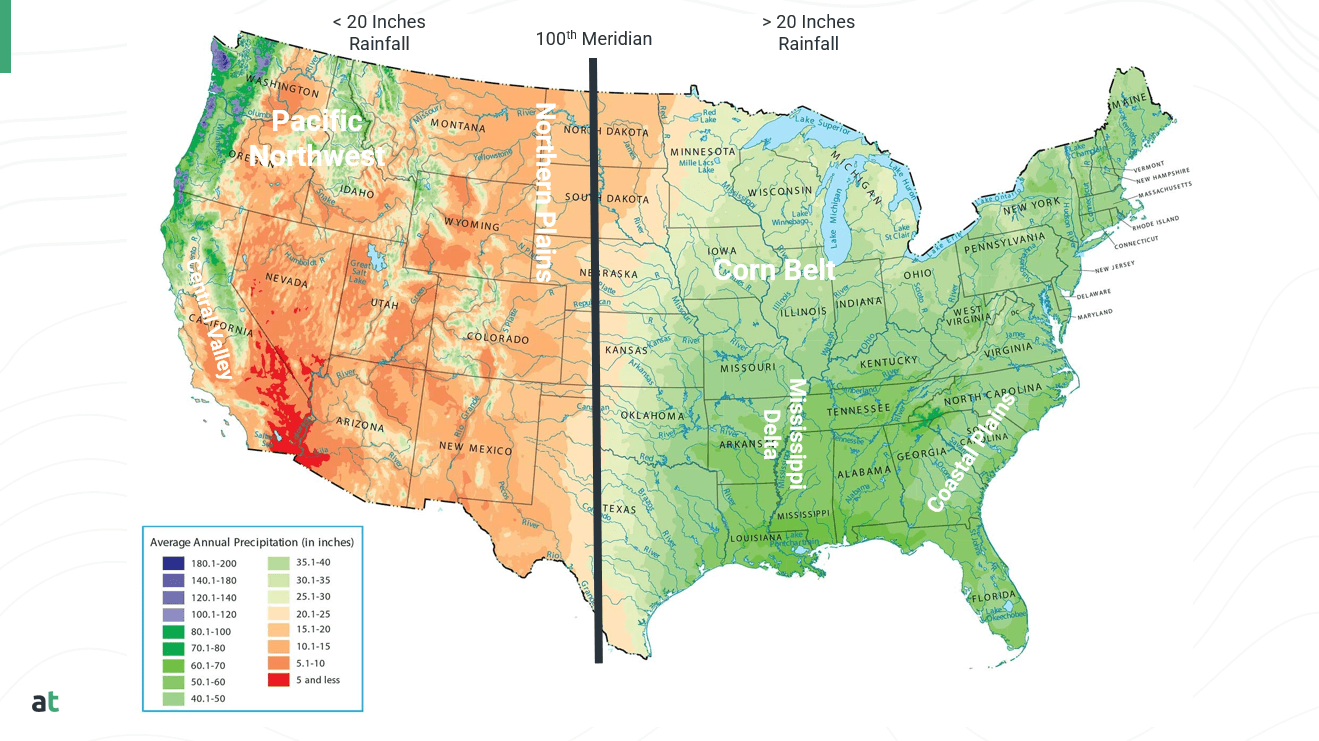
Figure 1 - Historical Average Rainfall Across Key Growing Regions
 Source: PRISM, AcreTrader
As a general rule, farmland east of the 100th meridian and in the middle latitudes between 37° N and 50° N are dryland farms, irrigated by annual rainfall. This is best represented by the Corn Belt states of Iowa, Illinois, Indiana, as well as southern Minnesota. In certain instances, such as farms with well draining soils or farms producing higher value crops that require highly consistent irrigation, rainfall may be augmented by irrigation. Groundwater aquifers in this region generally recharge naturally due to the greater annual precipitation.
High quality farmland in the Mississippi Delta and Coastal Plains, which lie below the 37th parallel north and east of the 100th meridian are irrigated by either groundwater or surface water. In these regions, an understanding of the groundwater aquifer conditions and/or surface water availability is critical. Due to the greater annual precipitation, the groundwater aquifers are generally in a sustainable condition, however this is not always the case as certain regions with heavy clay soils do not provide the permeability necessary to capture precipitation at an adequate rate. This is a critical assessment made during the due diligence process.
As you move West of the 100th meridian in the United States, the climate is generally much more arid and water resources much more scarce. This scarcity makes water rights significantly more valuable. When these more arid climates are combined with reliable water access, it can create highly favorable growing conditions to produce high-value crops.
Regions such as the Columbia River Basin in Washington, Snake River Basin in southern Idaho and eastern Oregon, Central Valley of California, and America’s Winter Salad Bowl in southern California all represent some of America’s greatest agricultural powerhouses for the production of higher value crops due to their access to highly valuable surface water rights.
The Critical Importance, and Value, of Senior Rights
The American West abides by the Prior Appropriation Doctrine. For example, imagine a buffet line where the food represents the water in a river. Under Riparian Law in the Eastern United States, everyone sits at a round table. If there isn’t enough food, everyone takes a slightly smaller portion so that everyone receives food to eat. Under Prior Appropriation in the Western United States, everyone stands in a single-file line based on when they arrived. If the first person in line arrived in say 1870, they fill their plate completely. The next person (1900) fills their plate completely, the last person (1980) only gets to eat if there is food left over after everyone ahead of them has finished. If the kitchen is running low on food (drought), the last people starve while the first eat their full meal. The “Senior” Right resides with the oldest claims, while the “Junior” Right resides with those with the newer claims. If water is ever low, a Senior Right holder can place a call on the river, legally forcing all Junior users, upstream and downstream, to shut off their headgates so the water can flow to the Senior Rights holders. Senior Rights holders cannot simply hoard water, they must prove that they are using it for a Beneficial Use, such as irrigating crops.
In the West, water is treated like a priority list, not a shared pool. The oldest claims get their full share of water first, regardless of who is wealthier or more important today. That spot in line is tied to the land itself—if you buy the land, you buy the spot in line.
The Public Policy Institute of California estimates that as much as 900,000 acres of irrigated farmland in the Central Valley of California could be fallow by 2040 as a result of needed groundwater regulations and limited supply. Recent studies suggest that freshwater aquifers have seen unprecedented losses since 2002, with areas experiencing drying increasing by twice the size of California annually across the Northern Hemisphere.
If these trends continue, Senior surface water rights in these key regions at the front of the line will only become more valuable.

Managing Director
Drew Lipke joined AcreTrader in 2021 and serves as Managing Director, leading the sourcing and underwriting of farms acquired and managed by AcreTrader LLC. Drew brings more than 14 years of experience across debt and equity capital markets, including roles in corporate credit analysis, equity research, and institutional equity sales. Prior to AcreTrader, Drew spent 12 years at Stephens Inc. covering multiple sectors including aerospace and defense, energy exploration and production, and building materials and construction services, and later served as Managing Director of corporate credit analysis at a fixed-income broker dealer. A Little Rock native, Drew has owned farmland in Arkansas for over a decade. He holds Series 7, 24, 63, 79, 86, and 87 licenses with FINRA and is a registered representative of North Capital Private Securities. Drew earned his degree from the University of Georgia’s Terry College of Business and was recognized by Institutional Investor as an All-America Research Team Rising Star.